Concept Intro and Problem Statements
The opening FigJam board reframed the opportunity around rider value and business value, establishing what 'add-ons' should mean in practice across compatible accessories, apparel, and service parts.
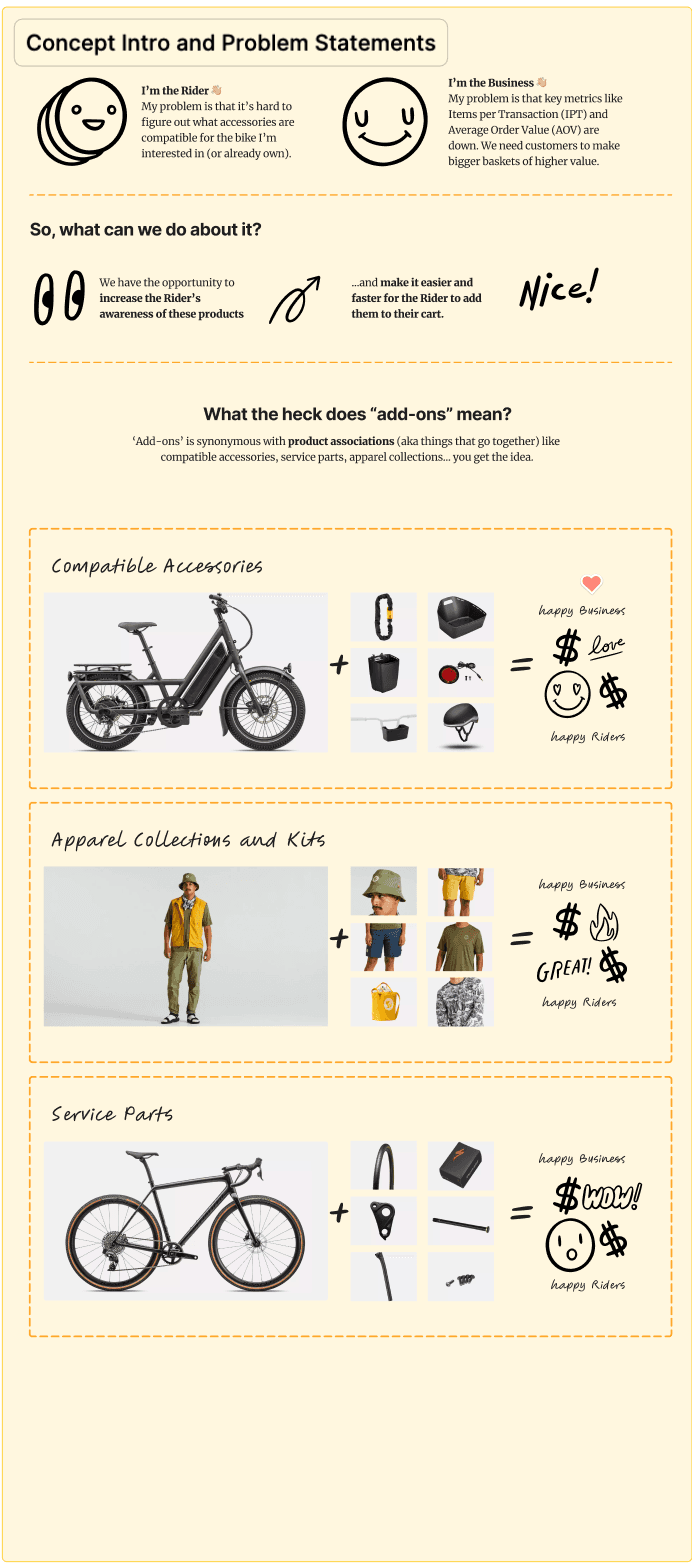
This work focused on a familiar commerce problem with more nuance underneath it: how do you help riders discover the right add-ons without making the experience feel like a generic upsell rail? Working with a senior UX strategist, I helped shape the concept from KPI framing and problem definition through competitive review, flow design, technical constraints, and final implementation guidance.
This project is useful in interviews because the process work is visible. Rather than jumping directly to polished UI, the team clarified business goals, defined the rider problem, studied adjacent patterns, and mapped the intended flow before final visual design and implementation.
The opening FigJam board reframed the opportunity around rider value and business value, establishing what 'add-ons' should mean in practice across compatible accessories, apparel, and service parts.
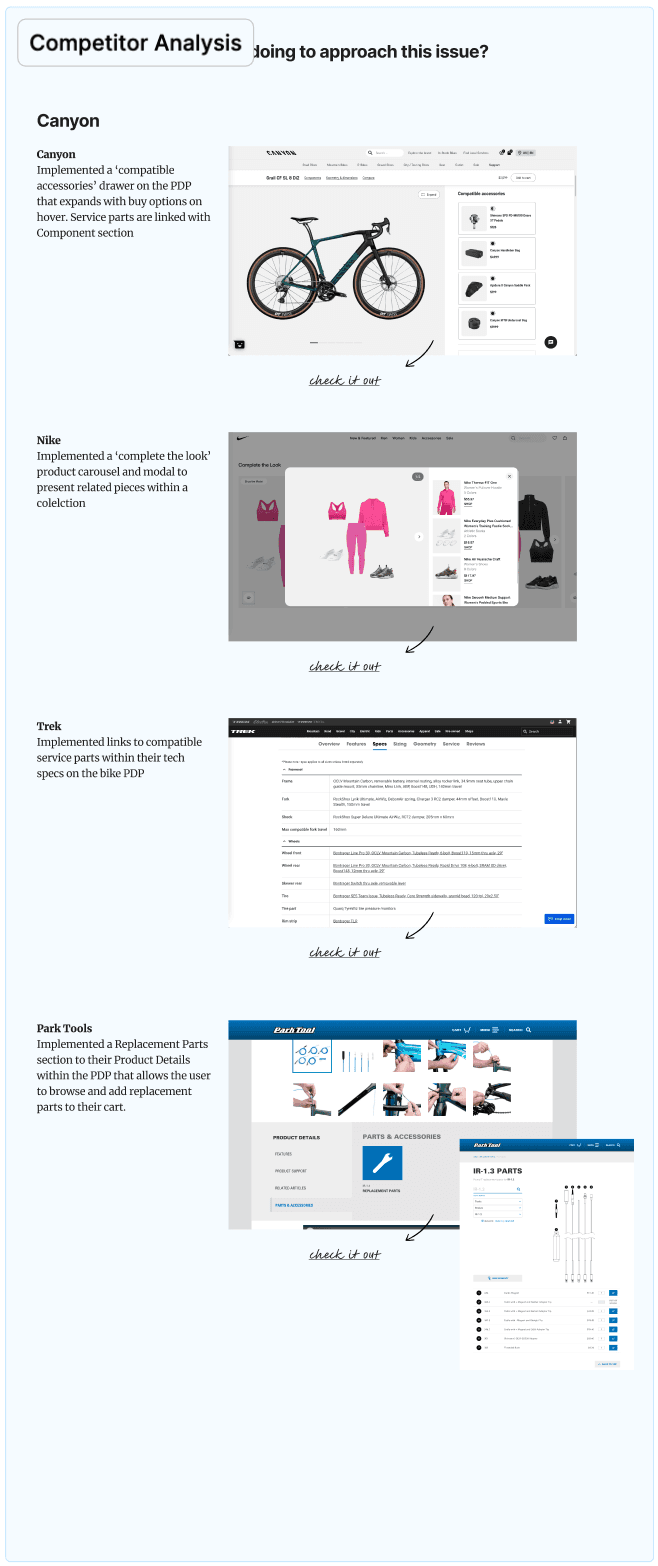
Competitive review helped identify where adjacent brands were solving compatibility and attach problems well, and where their patterns created friction or felt too transactional.
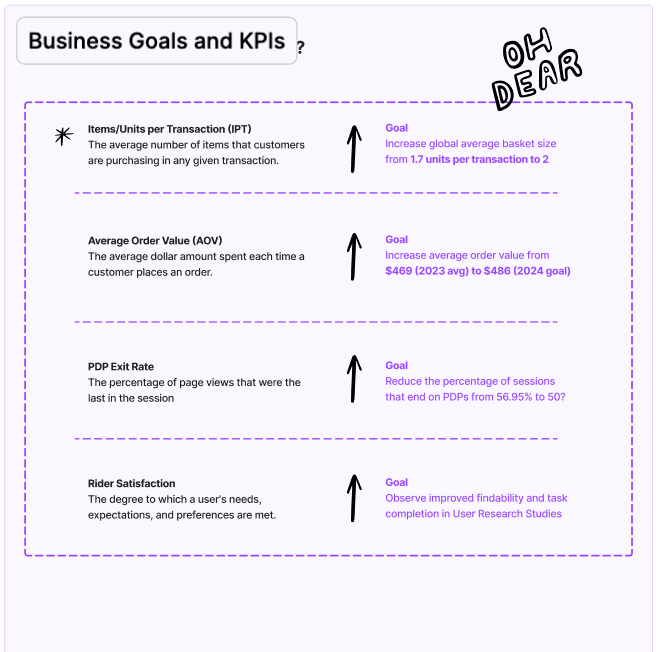
A shared KPI frame aligned the team on items per transaction, average order value, PDP exit rate, and rider satisfaction so the concept was anchored in outcomes instead of opinion.
The full flow documents how strategy turned into a shippable experience, including viewport previews, technical considerations, image guidance, and content constraints. Open it to inspect at full size.
These individual frames make the flow easier to discuss in an interview. They show how the concept moved from high-level strategy into concrete UX decisions, viewport planning, and implementation-ready detail.
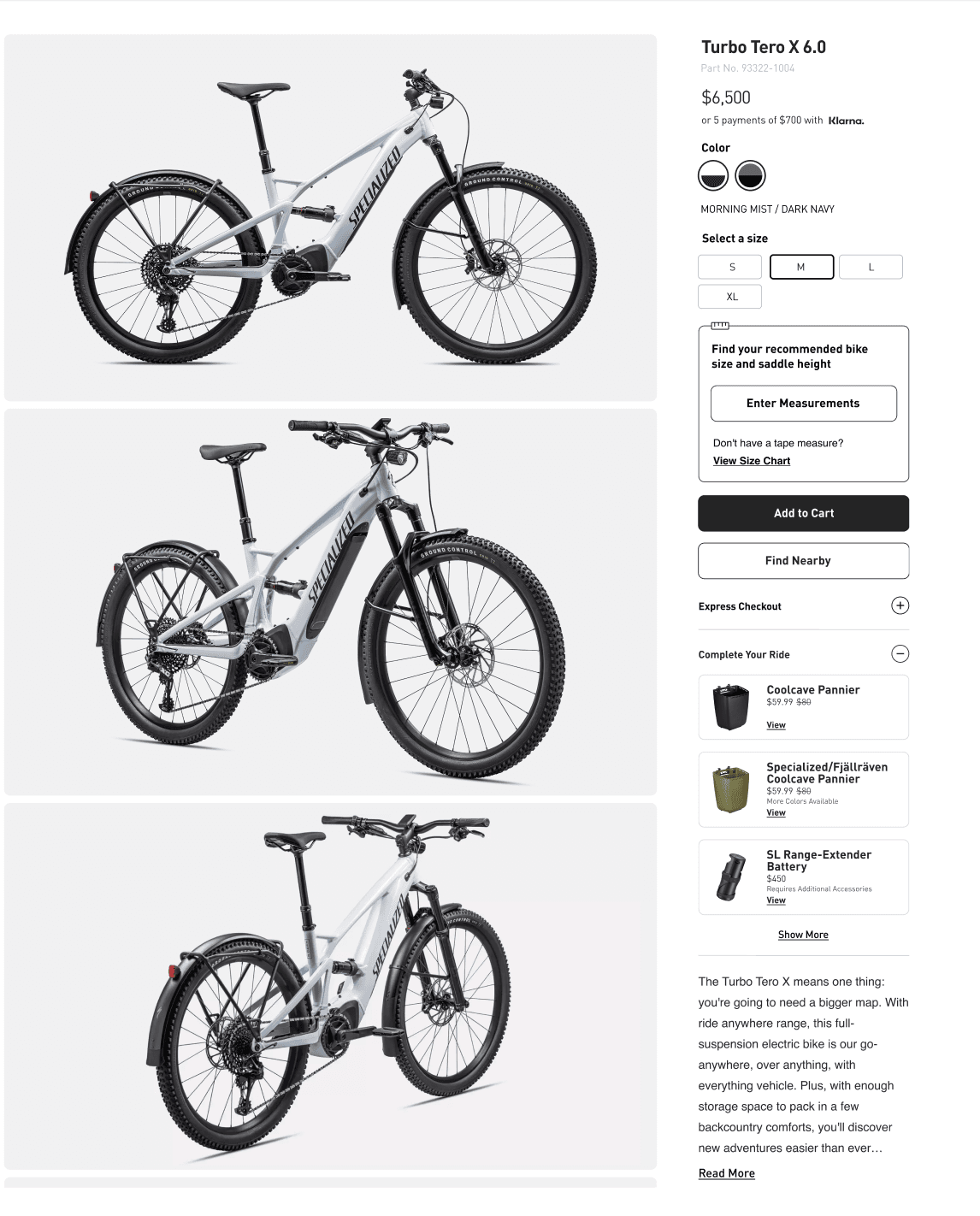
The add-ons accordion is expanded by default so riders immediately see compatible products without needing to hunt for the attach experience.
The final responsive mocks translated the strategy into concrete desktop and mobile layouts, keeping the attach experience useful, contextual, and visually integrated with the rest of the PDP journey.
The team aligned on concrete business and rider outcomes before exploring interface patterns, keeping the work focused on measurable value.
We clarified what kinds of add-ons belonged in the experience and how they should ladder back to rider needs rather than generic product promotion.
The flow included implementation details such as image specs, content rules, and viewport guidance so the handoff was useful to engineering and merchandising alike.
The team wanted to increase attachment and basket size, but the UX problem was broader than adding recommendations. We needed to define what add-ons actually meant in a rider context, identify where guidance would feel useful rather than intrusive, and create a pattern that balanced merchandising, relevance, and implementation feasibility.
We approached the feature as a guided merchandising system rather than a recommendation widget. The work began with KPI alignment and problem statements, then moved through concept framing, precedent analysis, flow definition, and design specifications that engineering could implement cleanly. The resulting experience connected riders to compatible accessories and supporting products in a way that felt intentional, contextual, and easier to act on.
This feature was rolled out more narrowly than the bike wayfinding carousel, but it is one of the best examples of how I work through upstream UX strategy. It shows how I help teams move from loosely defined revenue goals to a more coherent, rider-centered concept that can be designed, specified, and shipped.